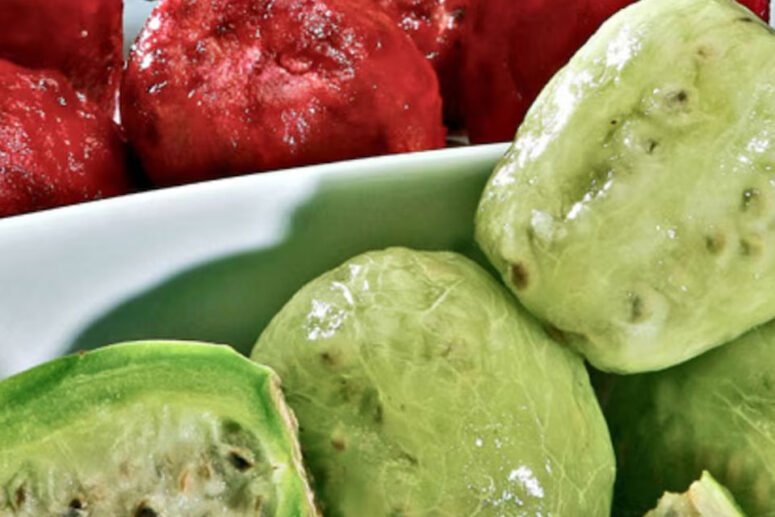
The prickly pear is the edible fruit of the nopal cactus (Opuntia ficus-indica), a cactus native to Mexico that is a symbol of national identity.
Cultural Significance
The Nahuatl name for the sweet prickly pear is nochtli. Its importance is such that Mexico City, originally Tenochtitlan, means “place where red prickly pears abound.” Furthermore, the nopal cactus and its fruit are a central part of the Mexican national emblem..
Main Varieties
Mexico has more than 20 varieties distinguished by their color and flavor:
White or Green Prickly Pear: This is the most common and widely consumed variety; it is smooth, refreshing, and has a mild flavor.
Red Prickly Pear (Cardona): Intensely colored, it is very sweet and rich in antioxidants.
Yellow/Orange Prickly Pear: It has citrus notes and a firm texture.
Xoconostle: A variety with a sour flavor used mainly in cooking for sauces, moles, and broths.
Benefits and Nutrition
It is valued for its medicinal and nutritional properties:
Digestion: Its high fiber content, especially in its seeds, helps reduce constipation.
Metabolic Health: It helps control blood glucose levels.
Antioxidants: It contains vitamins (C and B complex) and minerals such as calcium, potassium, and phosphorus.
Liver Protection: Benefits have been identified in reducing oxidative stress in the liver. Production and Season
Season: The main harvest occurs during the summer, although some varieties, such as the white variety, can be found from April to October.
Main Producer: The State of Mexico leads national production, accounting for more than 37% of the total.
Bien dice el dicho: “Me he de comer esa tuna aunque me espine la mano”. Sin duda uno de los frutos más sabrosos de México.
 How to prepare and eat it:
Clean the spines (if any): Use gloves or a cloth to handle it and remove the spines (glochids) with a brush or knife, if it isn’t already clean.
Cut off the ends: Remove the top and bottom parts of the fruit.
Make a lengthwise cut: Make a vertical cut in the skin, without cutting into the flesh.
Peel carefully: With the help of a fork or knife, separate the skin from the flesh and remove it, leaving the fruit intact.
Enjoy the flesh: Eat the fresh fruit; the seeds can be swallowed (if there aren’t many) or spit out, as you prefer.
Ideas for enjoying it:
Fresh: Eat it on its own, like any other fruit.
Beverages: Add it to refreshing drinks, juices, or smoothies, straining out the seeds for a smoother texture.
Desserts and sweets: Use it in jams, jellies, fruit paste, or preserves.
In salads: You can add pieces of prickly pear to sweet or savory salads.
Recommendations: It’s not necessary to add sugar; its natural sweetness is sufficient.
Consuming 1 to 2 prickly pears a day is ideal to take advantage of its nutrients such as fiber, vitamins, and antioxidants.